What Are The Taboo Principles Of Spring Diet And Health Care, And How To Combine The Nourishing And Healing Effects Of Food
The right way to eat in spring: dietary taboos that follow the laws of nature

Spring arrives, the earth warms up, and everything in the world begins to grow and develop. The yang energy in the human body also stretches and radiates upward and outward in accordance with the laws of nature. At this time, relying on the dual properties of "nourishing" and "healing" that food itself has to take care of the body can achieve twice the result with half the effort. However, dietary therapy is not a simple matter of "supplementing whatever you eat." If supplements are taken blindly, it may go against the weather and hinder the growth of Yang Qi. The true meaning of spring health lies in knowing what to avoid, so that you can better nourish the corresponding things.
Syndrome differentiation first: avoid blindly following trends, and provide meals based on people’s syndrome.
Syndrome differentiation and treatment are the core of TCM diet therapy. Food is like medicine, each with its own nature, flavor and meridian distribution. Most colds in spring are caused by wind evil. If you notice fever and sore throat, you should use pungent and cool items to relieve wind and heat. For example, mint and mulberry leaves can be used to boil water and drink it as tea. If you ignore the symptoms and blindly eat spicy, warm and dry things, it will be like adding fuel to the fire.
For those people with weak cardiovascular function, they should avoid eating greasy and thick-flavored foods when nourishing themselves in spring. Excessive intake of high-cholesterol foods will increase the burden on the circulation of qi and blood. Only by accurately selecting natural ingredients according to your current situation of deficiency, excess, cold and heat, that is, "deficient ones will replenish them, excess ones will purge them, hot ones will cool them, and cold ones will heat them up."
Adjust according to the time: avoid neglecting the weather and adjust your diet according to the spring weather
Man and heaven and earth correspond to each other. There is a gradual climate change in the three months of spring, which requires us to make fine adjustments to our diet. In early spring, the weather has just begun to warm up but the feeling of coldness is still there. Yang Qi has just begun to rise but has not yet become strong. When supplementing food at this stage, it is appropriate to add some warm and moisturizing items, such as a small amount of leeks and walnuts, to help Yang Qi resist the cold. However, be careful not to take large amounts of supplements, otherwise it will inhibit the nascent Yang Qi.
As time comes to late spring, the temperature gradually increases and the moisture content becomes heavier. At this time, the focus of health care shifts to strengthening the spleen and transporting dampness. In your daily diet, you can add barley, adzuki beans, white lentils and other natural ingredients to make porridge or soup to prevent dampness from causing obstruction to the spleen and stomach, thereby ensuring that the body can absorb nutrients in an efficient state and maintain active qi and blood biochemistry.
Take care of the spleen and stomach: avoid rushing for success, and maintain food in a step-by-step manner
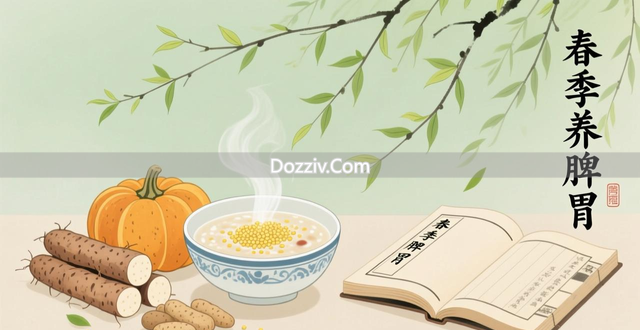
The human spleen and stomach are the foundation of acquired life and the source of qi and blood. When performing dietary therapy in spring, special attention needs to be paid to protecting the function of the spleen and stomach. No matter how precious the food is, if the spleen and stomach are weak and unable to transport it, it will become a burden on the body. When a person is sick or has just recovered from a serious illness, the body is in a state of "deficiency but not replenishment". At this time, the most taboo thing is to suddenly start eating a large amount of greasy or difficult-to-digest food.
The appropriate approach is to eat in moderation and gradually. First, start with light, easy-to-digest foods called rice porridge, such as yam porridge and millet porridge, to protect stomach qi. Wait until the stomach qi gradually recovers, and then gradually add other items with nourishing effects. If you eagerly pursue results, it will increase the burden on the spleen and stomach, which will lead to "eating relapse", causing the remaining pathogenic factors to continue to remain, and the original old disease will be difficult to cure.
Physical constitutions vary: avoid being the same, taking into account age and region
Different ages, different genders, and different geographical environments create completely different physical characteristics. For spring physical conditioning, these differences must be considered. For example, children are pure yang bodies, and their livers are often surplus, while their spleens are often deficient. When preparing tea in the spring stage, it is appropriate to choose something sweet and bland, such as hawthorn malt tea, which can play a role in digestion and stagnation, rather than something that provides intense nourishment.
Older people have a weak constitution and lack of Qi and blood. Spring routine and rest should be combined with soothing dietary therapy. For example, you can drink a cup of warm honey water to moisten dryness when you get up in the morning, and eat lily and white fungus soup in the evening to calm the nerves. There is a lot of humidity in spring in the south, so dietary therapy should pay attention to aromatherapy and dampening. In the north, which is relatively dry, dietary therapy should also take into account moisturizing the lungs and promoting body fluids. Only by putting individual differences into the framework of four-season health care can dietary therapy be accurate and effective.
Taboos during illness: avoid acting recklessly, and clarify dietary taboos
When a person is sick, various body functions will be disordered. When performing dietary therapy at this time, not only must the correct choice be made, but also the taboos must be clarified. This is a red line that must not be crossed. People with cold spleen and stomach or yang deficiency, During this period of spring, you should avoid eating raw and cold fruits to prevent excessive damage to Yang Qi. Patients with sores and skin diseases need to avoid eating seafood, mutton and other meaty and spicy foods to prevent aggravation of the condition.
People suffering from edema must strictly control their salt intake. People who cough and have a lot of phlegm should avoid sweet and sticky foods, otherwise they will encourage moisture and produce phlegm. I have just recovered from a serious illness and my appetite has just begun to return to normal. I need to use rice porridge to nurse myself back to health for a few days. After the function of the spleen and stomach is restored, I can gradually return to a normal eating arrangement. Only by knowing these taboos can dietary therapy truly become a supporting factor in the recovery process, rather than playing a hindering role.
Spring health care is a harmonious dialogue related to nature. We must avoid blindness, follow the natural direction, protect the spleen and stomach, distinguish our constitution, and observe taboos. Only in this way can we make full use of the healing power of natural ingredients to gently relieve qi, replenish qi and blood, and achieve physical and mental relaxation and soothing through every drink and every meal. In this way, we can live up to the spring glory and build a solid foundation for a year of good health.