What Should I Do If The Kitchen Sewer Pipe Leaks Water Upward? Collect These Clearing Methods Quickly

Kitchen water leakage crisis: in-depth analysis and root solution
There is a situation where the water in the sink does not continue to flow down, but instead "gurgling" upwards, and even overflows with residue and odor. This is a typical "kitchen sewer pipe backwater". As a senior housekeeper who has been working in the field of housekeeping for more than ten years, I have dealt with hundreds of cases of such "difficult and complicated diseases". Just today, I will start from the perspective of deep cleaning and provide you with a comprehensive and thorough analysis of the underlying logic and practical solutions to this problem.

Scene restoration: the daily "traps" behind betrayal
The situation of betrayal in many families does not happen in a short time. Just like frying and cooking all the time before and after the Spring Festival, a lot of grease is washed directly into the sewer. Or when cleaning the countertop, hard residues such as rice grains and vegetable leaves are accidentally washed into the sewer. These substances will slowly settle in the traps inside the pipes or at the corners of the horizontal pipes. At the beginning, the drainage speed just becomes slower. Once a large amount of water is used (such as during the peak period of washing vegetables), the pressure difference generated in an instant will cause the sewage to flow out from the lowest point – that is, the drain outlet of your sink. The purpose of understanding this scenario is to clearly understand: To solve the superficial problem, you must clean it up, and to fundamentally solve it, you must change your habits.
Tool Selection: A Professional-Grade “Arsenal” Checklist
When it comes to water leakage, appliances play a decisive role in efficiency. I would like to suggest that those who engage in domestic work, or homeowners with outstanding hands-on skills, should be equipped with the following equipment:
The first step in diagnosis is to use a device called a tube endoscope to penetrate deep into the pipe. This way, you can pinpoint whether the blockage is caused by grease condensation or a hard object stuck.
There is a manual dredge, which preferably has a coil spring with a diameter of more than 9mm and a length of 5 to 10 meters. This manual dredge has the ability to effectively penetrate hard blockages and will use the hook on the head to bring back foreign objects.
3. There is something called a high-pressure air cannon dredging gun : it uses carbon dioxide to compress air to generate shock waves, thereby shattering the grease through physical action. Compared with chemical methods, it is more environmentally friendly and will not cause damage to the pipe wall.
<strong><strong class="text – highlight">Industrial grade heavy oil stain cleaner : Grease will form hard lumps after saponification, so a strong alkaline special dissolving agent must be selected to deal with it.
Operation process: three-step progressive dredging method
Step One: Deep Exploration and Preprocessing
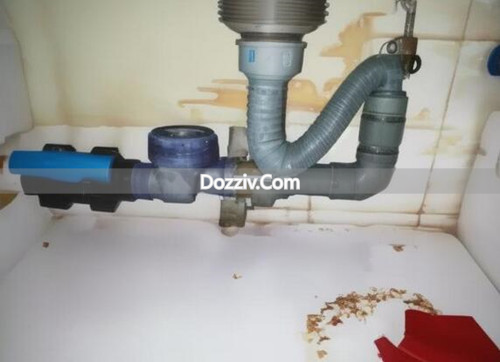
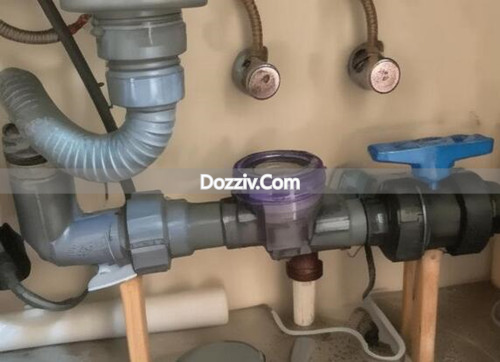
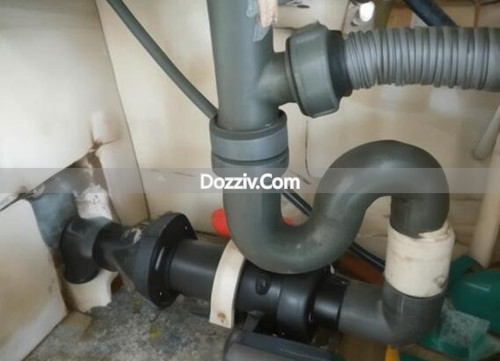
Clean the debris under the sink and remove the water trap, which is the U-shaped pipe. This step is extremely critical. About 40% of blockages occur here. After opening and cleaning, rinse with hot water and detergent to restore smoothness to this section. If water backflow still exists, it indicates that the main drain pipe is clogged.
Step Two: Mechanical and Physical Intervention
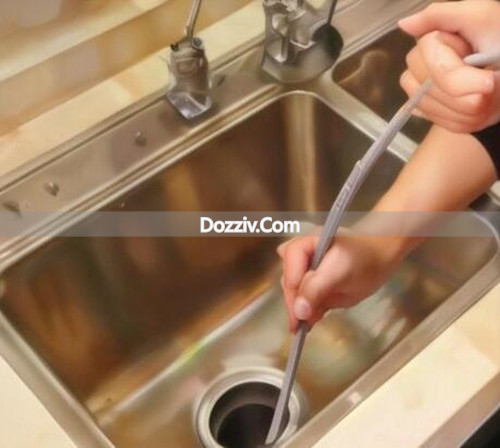
Insert the object with a spiral-shaped head marked as a manual dredge into the opening of the pipe, and let it rotate clockwise until it encounters an obstructive force. When you encounter that kind of obstructive force, don't forcefully push it away, but do a small pull and twitch back and forth, and use the power of rotation to "drill" into the blocked thing. If it is determined that it has the nature of oil (it feels sticky to the hand), you can change it to a tool marked with a high-pressure air cannon dredge gun , aim it at the pipe opening, seal it with a wet cloth and fire it. The high-pressure gas pushes the blockage toward the main pipe.
Step Three: High Temperature Dissolution and Erosion
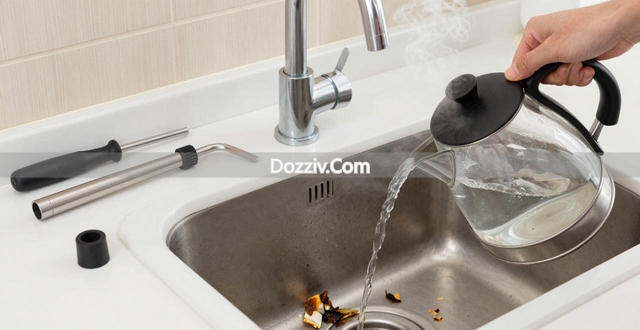
After mechanical dredging, some of the blockages were not completely eliminated. At this time, prepare a pot of hot water that is close to boiling and pour it in several times. The momentum generated by the water can carry away the crushed residue. If it is a grease blockage, the dissolving effect of hot water is far greater than that of cold water.
Detail processing: the invisible is the key
When they generate a large number of carbon dioxide bubbles in the pipe, they can physically peel off the sticky substances on the pipe wall and completely eliminate the source of the odor.
Note: Safety always comes first
When dealing with counterfeiting issues, there are a few minefields that you must not step into:
Be careful when using chemical dredges. Many dredges on the market, such as "thermite", will generate high temperatures when exposed to water. If the pipe is made of polyvinyl chloride, it is extremely easy to deform the pipe and even burst!
Uh-huh, listen up, regarding the eye protection I’m going to talk about next, you have to pay attention. Whether you are using a high-pressure tool or dismantling a water trap, there is a possibility that sewage will splash. Therefore, you must wear goggles to prevent bacterial infection in your eyes.
3. Circuit safety : If there is a socket for a water purifier or garbage disposal under the sink, do not deal with the accumulated water first. You must disconnect the power supply to prevent electric shock. Do this.
Guide to avoid pitfalls: Don’t spend a lot of money to “save trouble”
The trick is that the so-called "one-stop solution" is superstitious. For the completely hardened grease layer, chemical agents can only soften the surface, but cannot fundamentally solve the problem. It will definitely become clogged again after a week.
The iron wire or inferior spring is used to forcefully poke it. The iron wire is not hard enough and the inferior spring is of poor quality. It is also very easy to get stuck at the pipe joint, so that the thing cannot be removed, and instead the wall needs to be broken for repair.
Worst Situation Three: Only paying attention to one's own situation, but completely ignoring the surrounding situations. If you are on a lower floor of a high-rise residential building, water backflow may be caused by a blockage in the main drainage pipe of the building. When encountering this situation, trying to dredge it yourself has no effect. At this time, you must contact the property management company as soon as possible and ask them to dredge the passage outside the building that is specially marked as a "sewage well".
Effect comparison: qualitative changes brought about by deep cleaning
The drainage was maintained smoothly for the time being, but there was still an odor in the sink that was not easily detected. After a week, the drainage speed slowly slowed down again, and the risk of water backflow still existed unchanged.
After deep cleaning, the sound of water flowing when draining is smooth and powerful, showing a whirlpool shape and flowing downward. There is no odor under the sink. Remove the water trap for inspection. The inner wall of the pipe is smooth and clean and there are no sticky objects. By establishing regular maintenance, that is, high-temperature flushing once a month and then adding baking soda for maintenance, we can prevent the occurrence of water backflow in the kitchen from the root, and return the kitchen to a clean and hygienic state.